
Why Do Cats Love Sitting in Boxes?
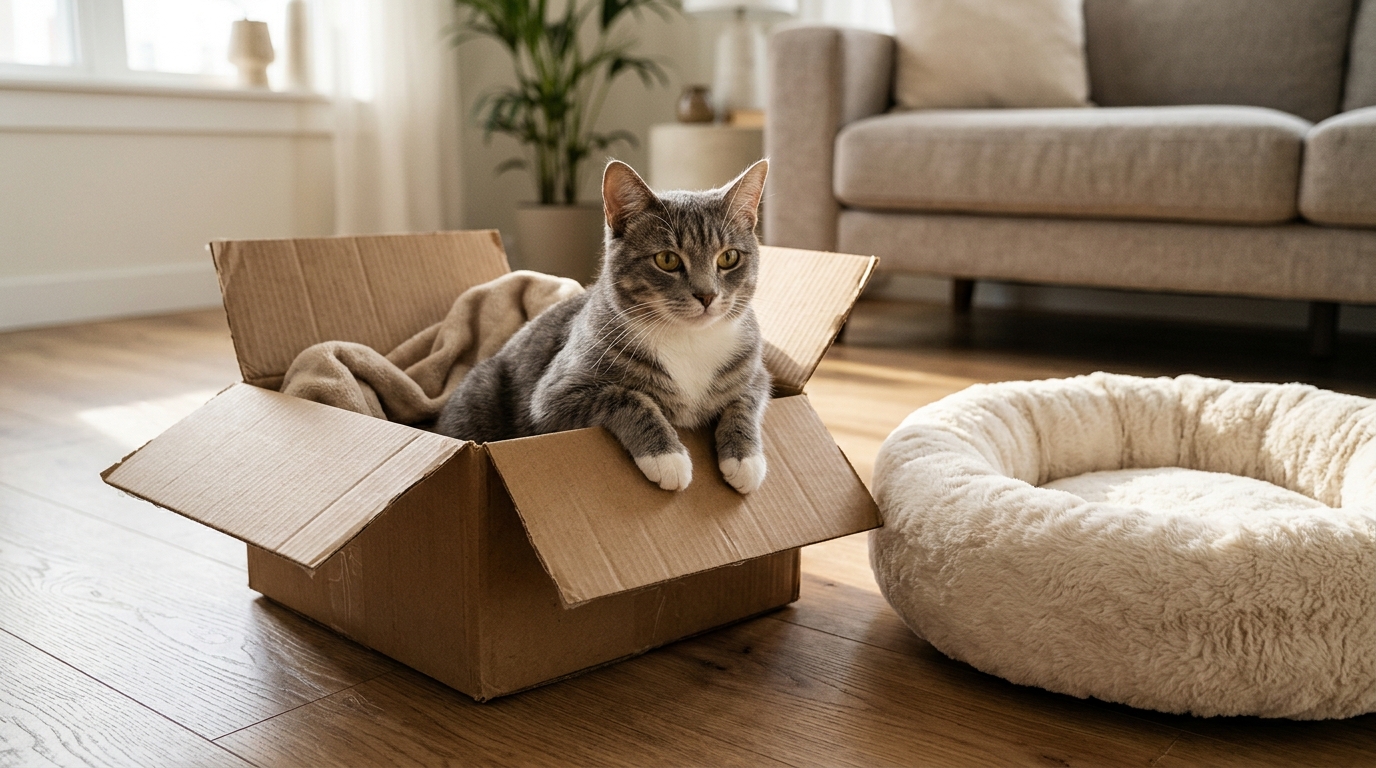
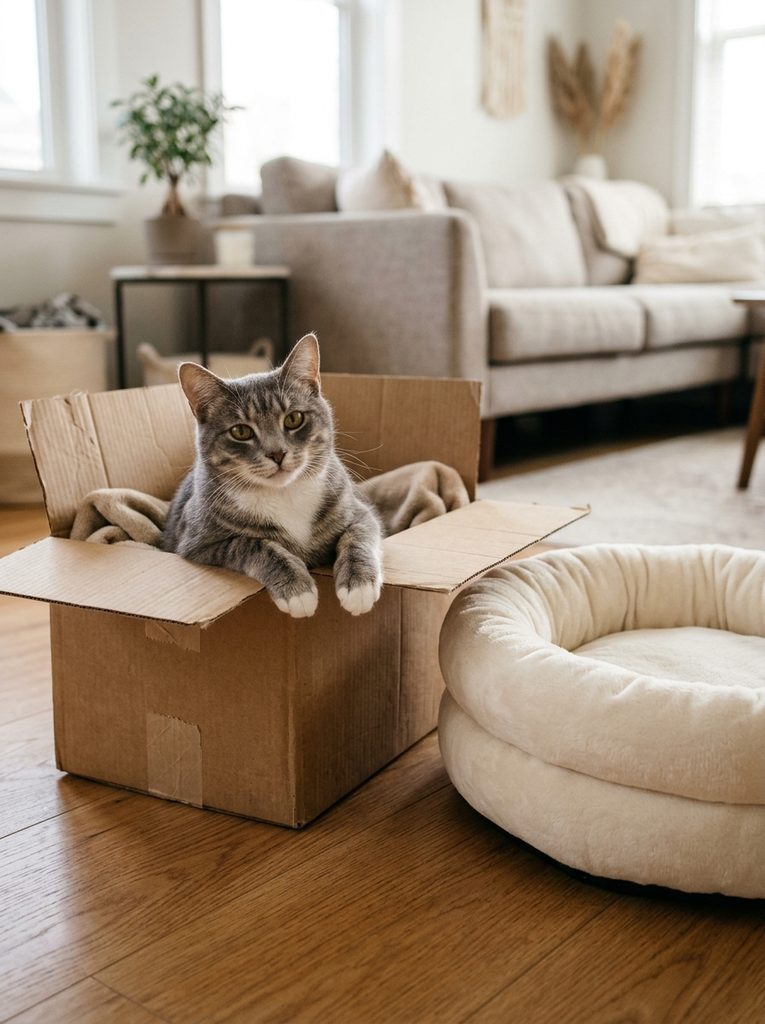
You buy your cat a beautiful new bed, fill it with a soft blanket, and place it in their favorite corner. But the moment a delivery box arrives, your cat ignores the expensive bed and climbs straight into the cardboard box!
Sound familiar?
If you’ve ever wondered why cats love sitting in boxes, you’re definitely not alone. It’s one of the funniest and most recognizable things cats do. Some squeeze themselves into tiny boxes, others spend hours sleeping inside them, and a few seem to claim every empty package that enters the house.
But this behavior isn’t just about being silly. Cardboard boxes offer cats several things they naturally enjoy, including warmth, privacy, security, and opportunities to play.
Understanding why your cat loves boxes can also help you create a more comfortable and stimulating home environment. Let’s look at the reasons behind this adorable feline habit and how you can turn an ordinary cardboard box into a safe little retreat for your furry friend.
1. Boxes Make Cats Feel Safe and Protected
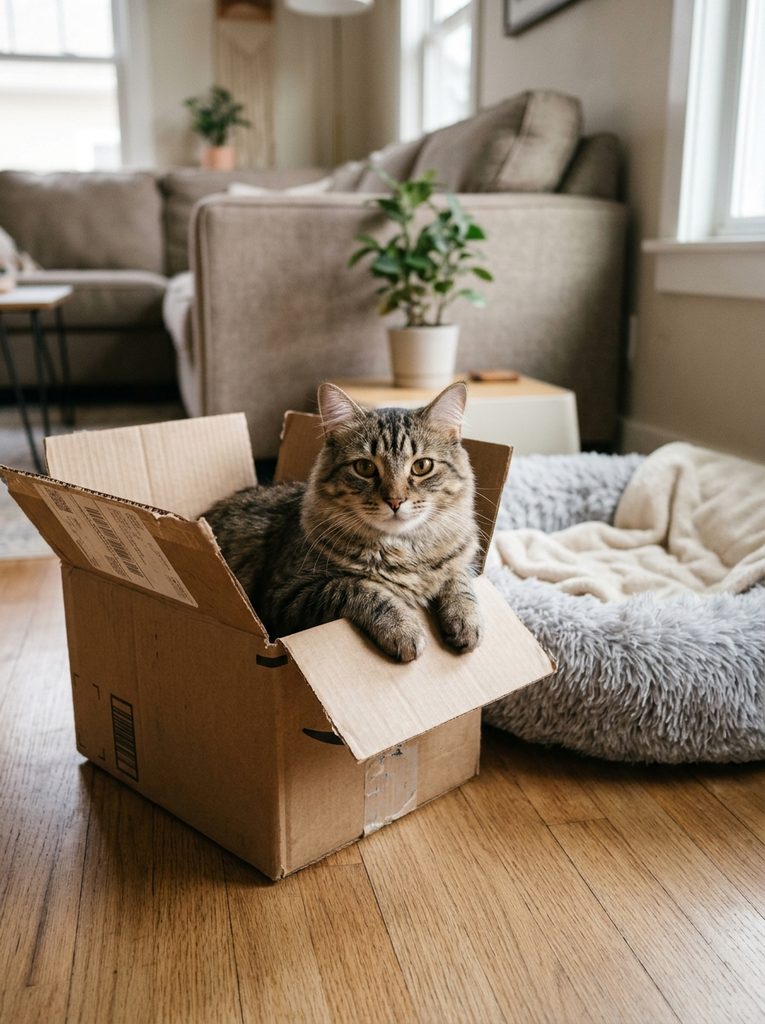
One of the biggest reasons cats love boxes is that enclosed spaces can make them feel secure.
Cats are naturally cautious animals. Even though domestic cats don’t need to hunt for food or protect themselves from predators, many of their natural instincts remain.
An enclosed box gives your cat a place to retreat when the house becomes noisy or unfamiliar.
The sides create a protective boundary, while the opening allows your cat to watch what’s happening without being completely exposed.
This can be especially comforting when guests visit, children are playing, or another pet is being particularly energetic.
You might notice your cat choosing a cardboard box whenever they want some peace and quiet.
Try this: Place a sturdy box in a quiet corner of your home. Add a familiar blanket and allow your cat to decide when to use it.
2. Cardboard Boxes Help Cats Stay Warm
Have you noticed how your cat always seems to find the warmest spot in the house?
Cats often seek comfortable temperatures when resting, and cardboard boxes can provide a cozy environment.
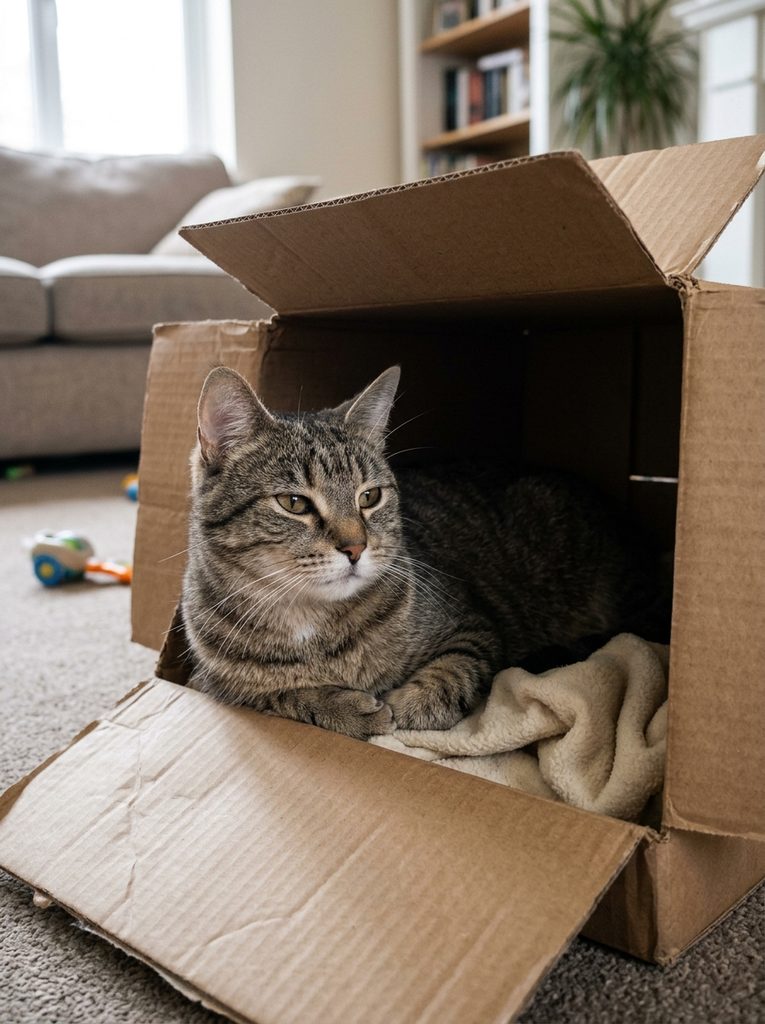
Cardboard has insulating properties that can help reduce heat loss from the body. When a cat curls up inside a box, its sides help create a sheltered space that may feel warmer than an open sleeping area.
This is particularly appealing during colder months or when your home has cool floors.
A soft blanket can make the space even more comfortable.
However, avoid placing boxes near heaters, fireplaces, or other sources of excessive heat. Your cat should always be able to leave the box whenever they want.
3. Boxes Satisfy Their Natural Hiding Instinct
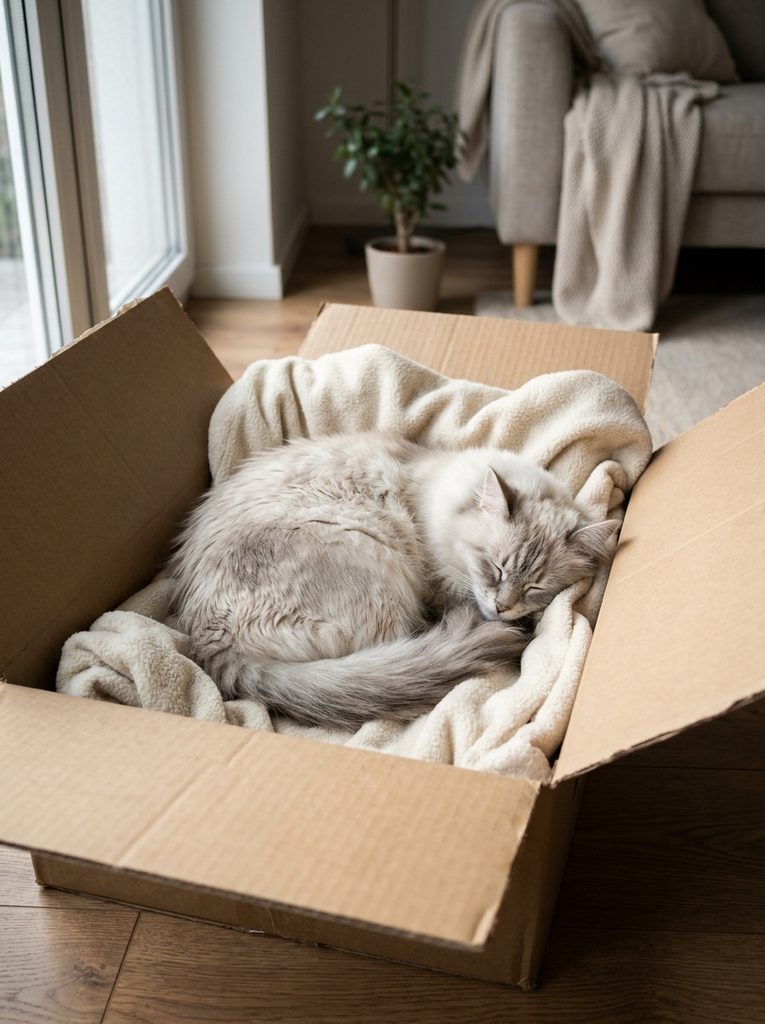
Cats enjoy having private places where they can disappear for a while.
In the wild, hiding can help cats observe their surroundings, approach potential prey, and avoid unwanted encounters.
A cardboard box provides a convenient hiding spot without requiring much effort.
Your cat may climb inside when they’re tired, feeling cautious, or simply looking for a peaceful place to rest.
Some cats also enjoy hiding inside boxes during playtime, especially when they’re watching a moving toy or waiting for someone to walk past.
It’s important to remember that hiding isn’t always a sign of fear. Many healthy, relaxed cats enjoy having quiet places throughout the home.
However, if your cat suddenly starts hiding much more than usual, particularly alongside changes in eating, drinking, or activity, consult your veterinarian.
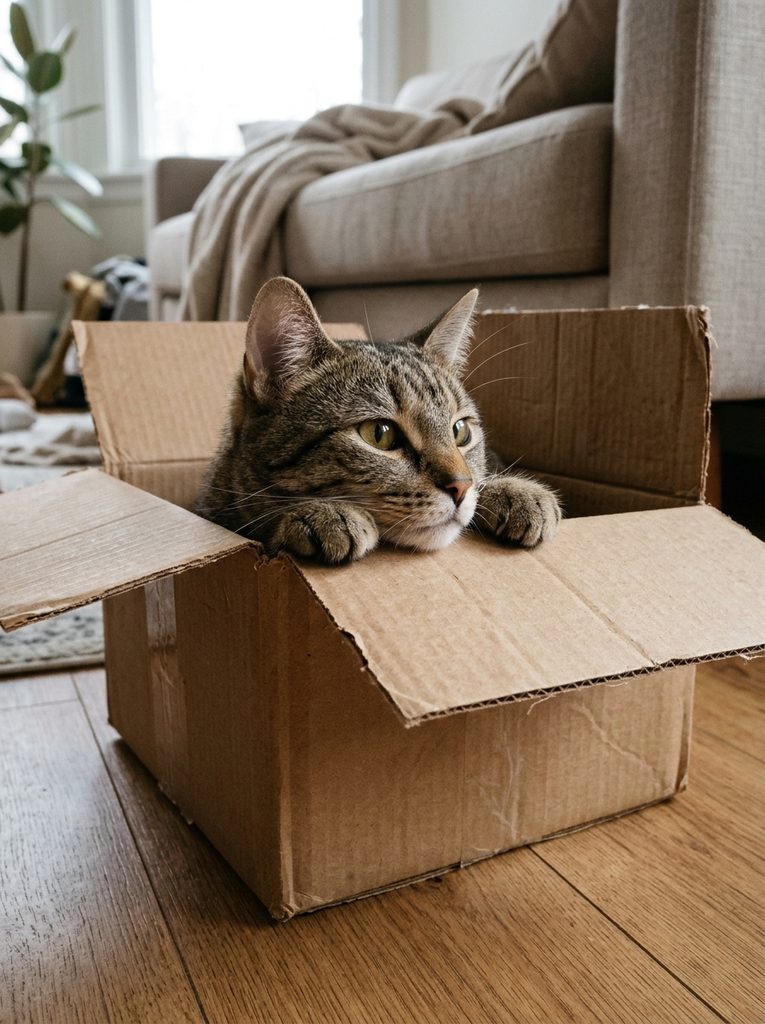
4. Boxes Turn Ordinary Playtime Into a Hunting Adventure
A cardboard box can become a miniature playground for a curious cat.
Cats have natural hunting instincts, and they enjoy activities such as stalking, watching, chasing, and pouncing.
An empty box provides a convenient hiding place where your cat can observe movement and prepare to jump.
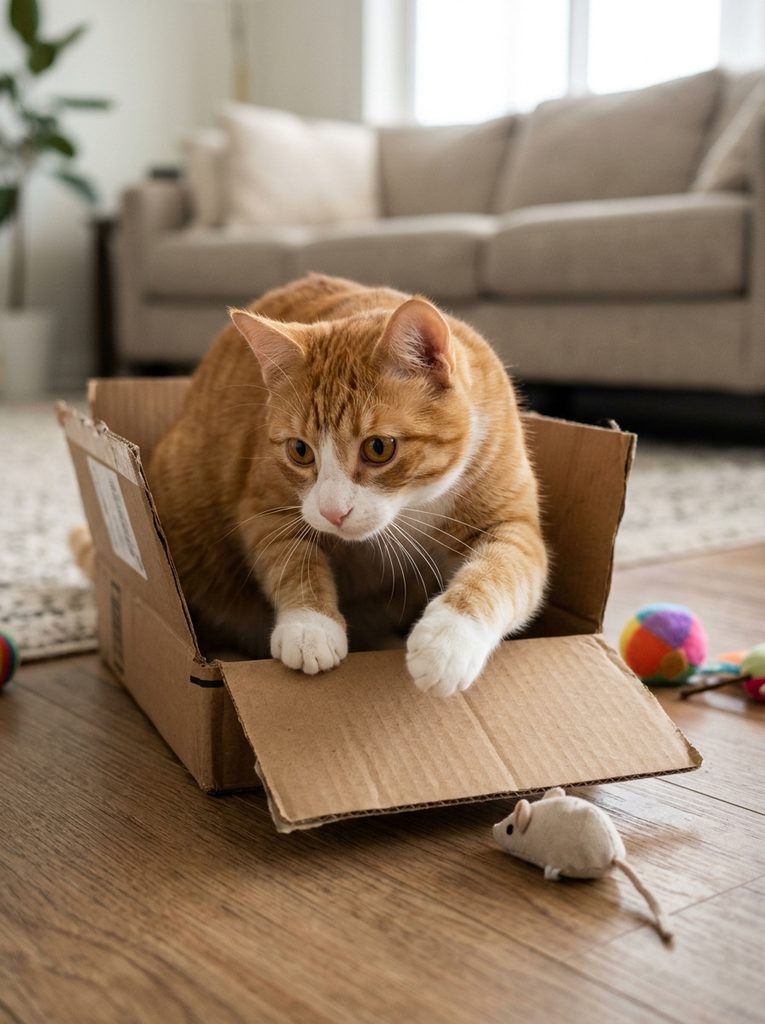
Try moving a lightweight toy near the entrance of the box. Your cat might crouch down, wiggle its body, and suddenly reach out with a paw.
This playful behavior allows cats to practice movements associated with hunting.
It also gives indoor cats an opportunity to enjoy mental and physical stimulation.
For an even more interesting activity, place a few safe toys around the box and encourage your cat to explore.
Always supervise play with strings, ribbons, and toys containing small detachable parts.
5. Cats Are Naturally Curious About New Things
If there’s one thing cats are known for, it’s their curiosity.
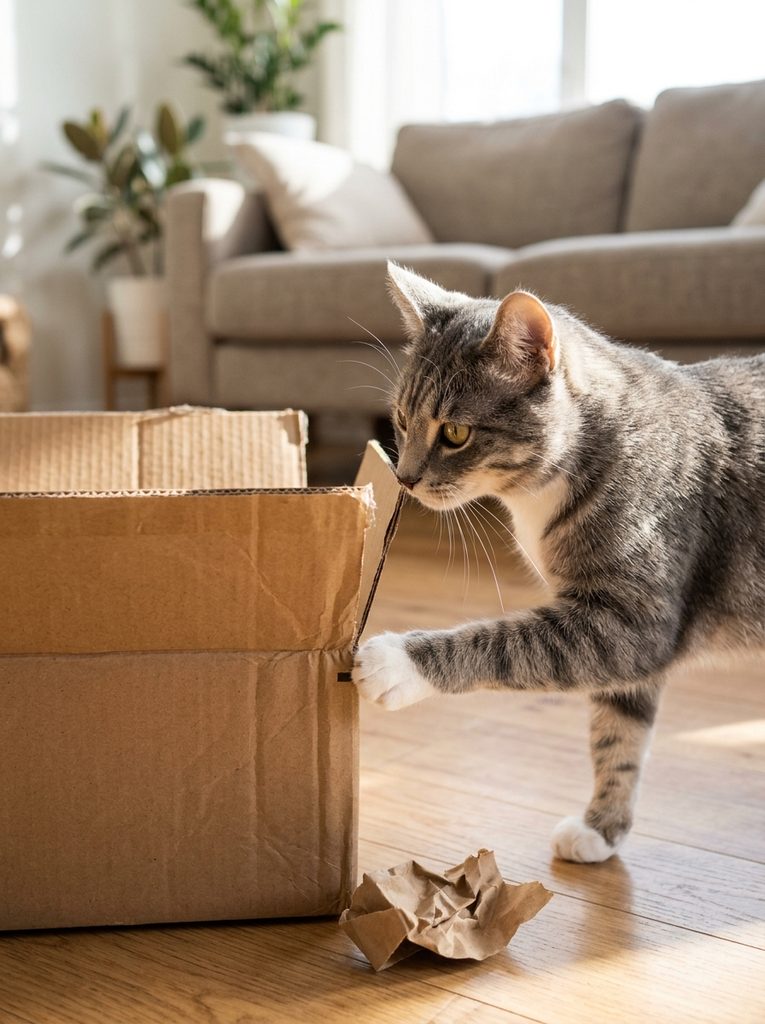
A new cardboard box introduces something unfamiliar into their environment. It has a different shape, texture, smell, and sound.
Naturally, your cat wants to investigate.
They might sniff the corners, scratch the sides, walk around it, or climb inside to see what’s happening.
Even after the package has been unpacked, the box may remain interesting because it has become a new part of their surroundings.
Some cats prefer to inspect a box before using it, while others jump straight inside without hesitation.
This curiosity is one reason ordinary household objects can sometimes be more exciting to cats than expensive toys.
6. The Texture of Cardboard Feels Good to Their Paws
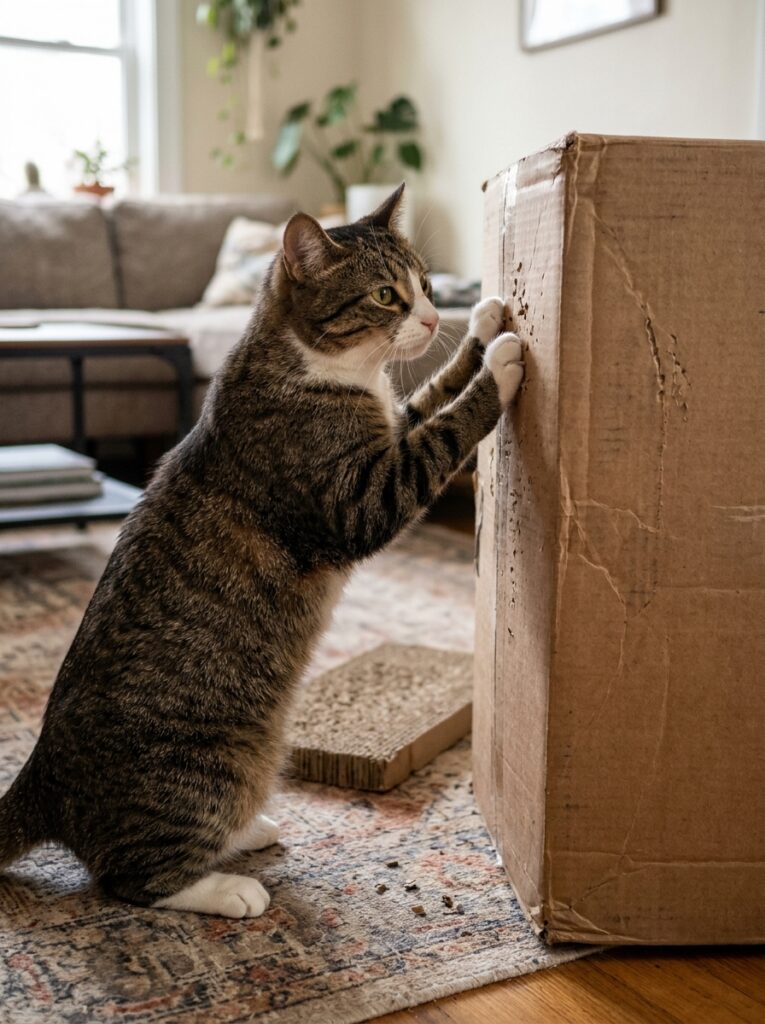
Cardboard isn’t just interesting to look at. Its rough texture can also make it enjoyable for cats to scratch.
Scratching is a normal feline behavior. It helps cats maintain their claws, stretch their muscles, and leave scent marks through glands in their paws.
The texture of cardboard provides resistance, making it satisfying for many cats.
You might notice your cat scratching the sides, digging at the bottom, or gently biting the edges before settling down.
If your cat enjoys scratching cardboard, consider providing a proper cardboard scratching pad.
This gives them an appropriate place to scratch and helps protect your furniture.
7. Boxes Can Provide Comfort During Stressful Situations
Cats sometimes need a quiet place to retreat when their surroundings feel unfamiliar.
Moving to a new home, welcoming another pet, having visitors, or changing daily routines can create stress for some cats.
A familiar hiding box can provide a sense of control because your cat can choose when to come out and interact.
Research involving shelter cats has found that access to hiding boxes can help cats cope with unfamiliar environments.
This is one reason hiding boxes are sometimes provided in animal shelters.
If your cat seems nervous, offer a clean box in a peaceful location.
Don’t force your cat to come out. Give them time and allow them to approach people or explore when they’re ready.
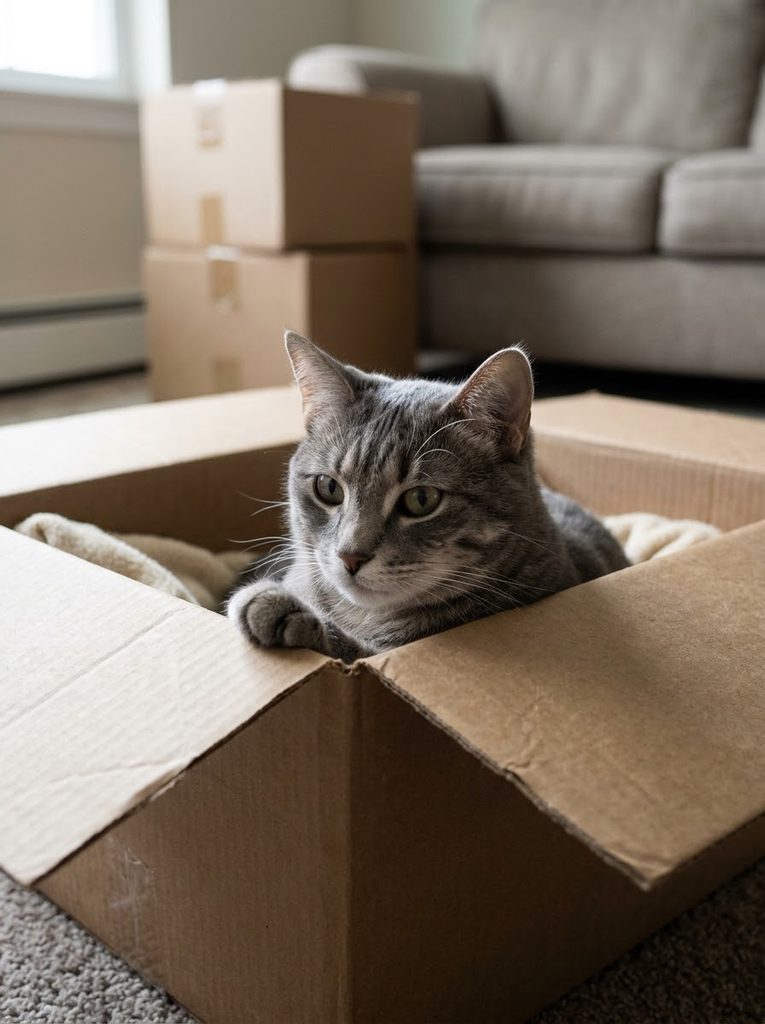
8. Small Boxes Give Cats a Cozy Feeling
Why does your cat sometimes squeeze into a box that looks far too small?
It might seem uncomfortable, but many cats enjoy resting in snug spaces.
The sides of a smaller box can provide gentle contact around their body, which some cats find comforting.
You might see your cat curling up tightly, tucking its paws underneath, and resting its head against the cardboard.
However, not every small box is suitable.
Your cat should have enough room to enter, turn around, and leave comfortably. Avoid boxes with narrow openings or damaged sides that could trap your pet.
A cozy hiding spot should always feel safe, never restrictive.
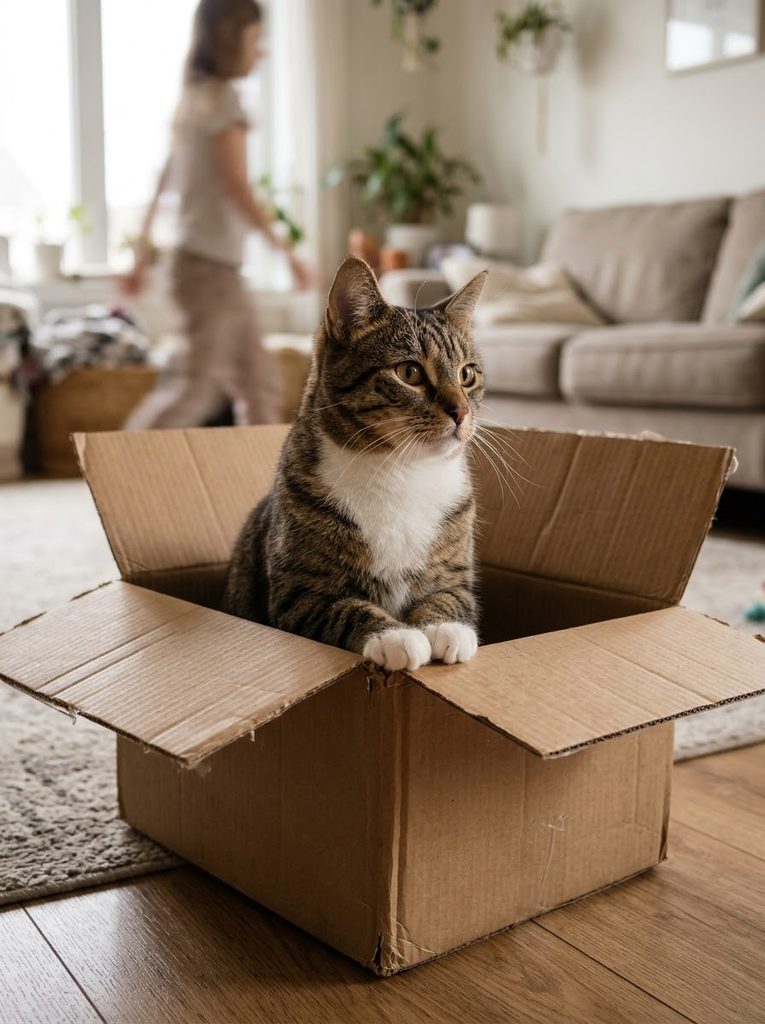
9. Boxes Give Cats a Comfortable Place to Observe Everything
Cats are naturally interested in what’s happening around them.
Even when they’re resting, they often like to keep an eye on their surroundings.
A box can function as a little observation station.
Your cat can sit inside, look through the opening, and watch family members moving around the house.
This can be particularly appealing when the box is positioned somewhere your cat already enjoys spending time.
You might notice your cat sitting in the same box every afternoon, watching the room as though it’s keeping track of everything.
It’s a simple way for them to relax while remaining aware of their environment.
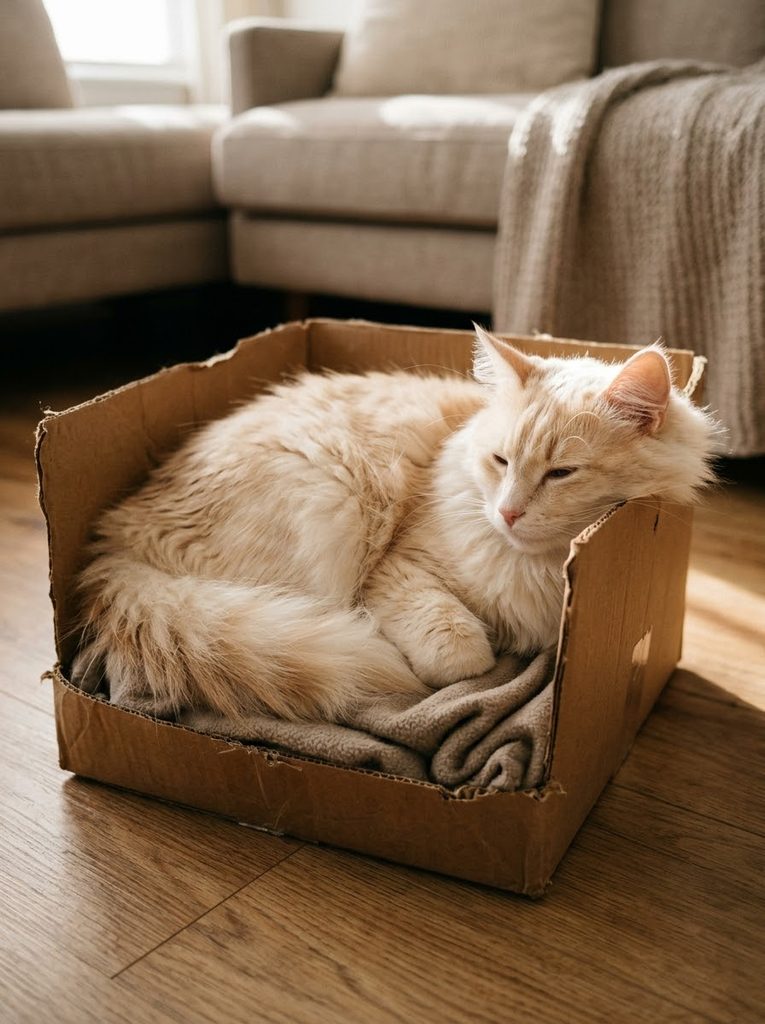
10. Sometimes, Cats Just Enjoy Boxes!
Not every cat behavior needs a complicated explanation.
Sometimes, cats simply enjoy the experience of climbing into a cardboard box.
They can jump in, scratch the sides, hide, stretch, play, and nap.
A single box provides several different experiences without requiring much effort.
And because cats have individual personalities, their preferences can vary.
One cat might spend hours sleeping in a box, while another prefers using it as a hiding place during playtime.
That’s part of what makes living with cats so entertaining!
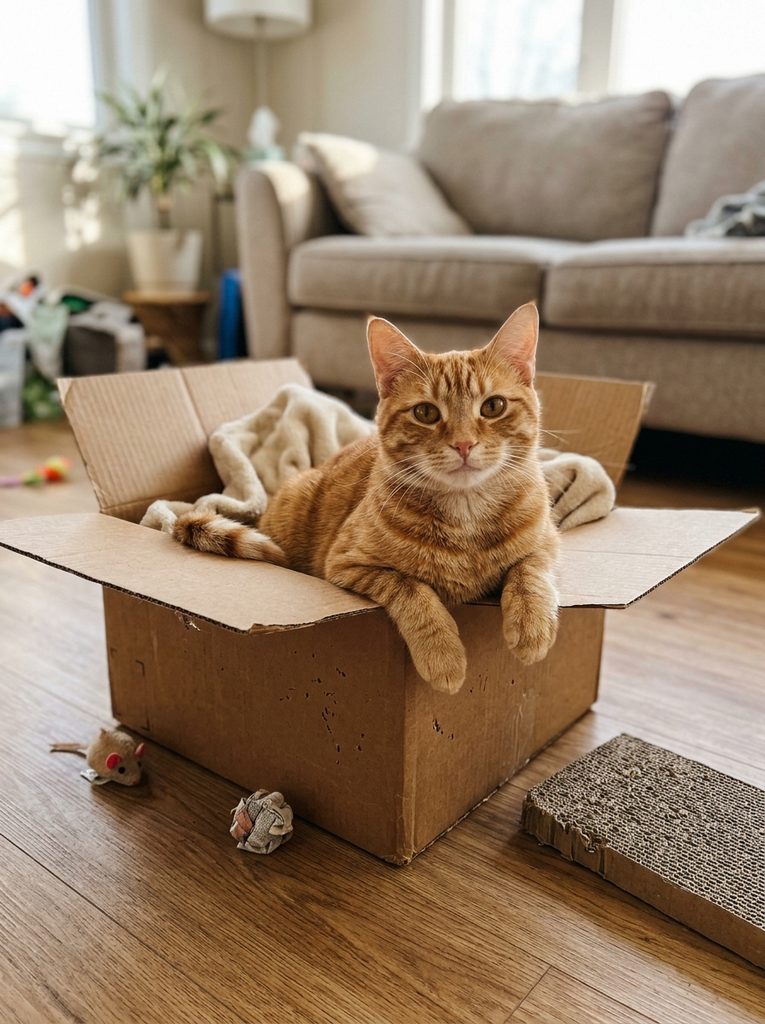
Why Does My Cat Prefer a Cardboard Box Over an Expensive Bed?
It’s a familiar situation for many cat owners.
You spend money on a beautiful cat bed, bring it home, and your furry friend chooses the empty delivery box instead.
So, what’s going on?
The answer usually comes down to comfort and personal preference.
Traditional cat beds are often open, while boxes provide enclosed sides that some cats find reassuring.
Cardboard also offers a different texture from soft fabric. Some cats enjoy scratching it, exploring it, and rubbing their faces against it.
Another factor is location. Your cat may simply prefer where the box is placed.
Instead of assuming your cat dislikes its bed, try placing the bed somewhere quiet and adding a familiar blanket.
You can even put the bed near the box to see whether your cat becomes interested.
Remember, the goal isn’t to make your cat use an expensive bed. It’s to provide comfortable and safe resting options.
Are Cardboard Boxes Safe for Cats?
Generally, a clean and sturdy cardboard box can be a safe enrichment item for a cat.
However, it’s worth checking a few things before allowing your furry friend to play inside.
Here are some simple safety precautions:
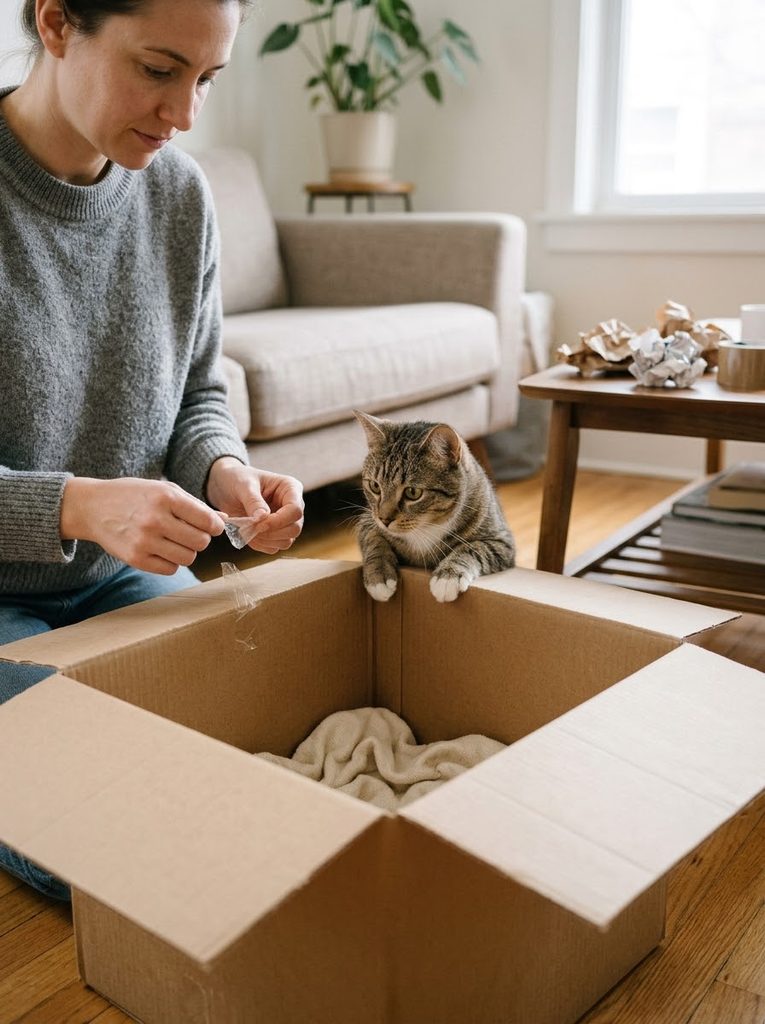
- Remove staples, plastic packaging, tape, and loose labels.
- Check for sharp edges and damaged cardboard.
- Avoid boxes that previously contained chemicals or cleaning products.
- Make sure the opening is large enough for your cat to enter and leave easily.
- Keep cardboard dry and replace it if it becomes damp or moldy.
- Avoid boxes with loose pieces that your cat might swallow.
- Supervise cats that frequently chew or tear cardboard.
Some cats enjoy biting cardboard during play, but swallowing pieces can create digestive problems.
If your cat regularly eats non-food materials, speak with a veterinarian rather than assuming it’s harmless play.
How to Make a Cardboard Box More Interesting for Your Cat
If your cat already loves boxes, you can make the experience even more enjoyable with a few simple additions.
You don’t need expensive equipment or complicated DIY projects.
Create a Cozy Sleeping Corner
Choose a sturdy box with enough space for your cat to stretch or curl up.
Add a washable blanket or a familiar towel.
Place the box in a quiet area away from busy walkways.
This creates a simple retreat where your cat can rest whenever it wants.
Make a DIY Peekaboo Box
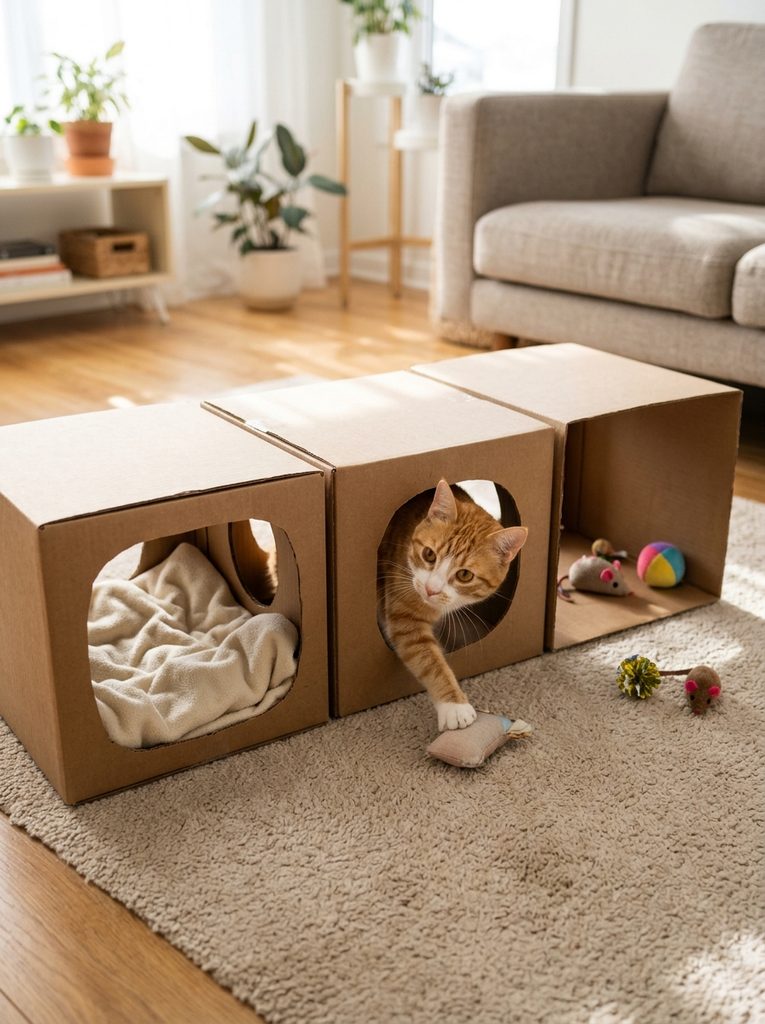
Take a sturdy cardboard box and cut a few large openings into the sides.
Smooth the edges carefully so there are no sharp or rough sections.
Place a lightweight toy nearby to encourage your cat to investigate the openings.
Always make sure the holes are large enough that your cat cannot get stuck.
Build a Simple Cardboard Playground
If you have several boxes, arrange them into a small play area.
You can place two or three boxes next to each other and create wide openings between them.
Keep the structure low, stable, and free from loose pieces.
Your cat can explore different sections, hide, and move between spaces.
Add a Few Favorite Toys
Place a soft ball or suitable cat toy inside the box.
You can also move a toy near the opening to encourage gentle chasing and pouncing.
Avoid leaving string toys or small detachable objects unattended.
Rotate the Boxes Occasionally
Cats enjoy exploring new things, and changing their environment slightly can keep playtime interesting.
When an old box becomes damaged or loses its appeal, replace it with another clean and suitable option.
You don’t need to keep every delivery box. One or two safe options are usually enough.
When Should You Worry About Your Cat Hiding in Boxes?
Enjoying cardboard boxes is generally normal behavior.
However, there’s a difference between a cat choosing a cozy hiding spot and a cat suddenly withdrawing from everyday activities.
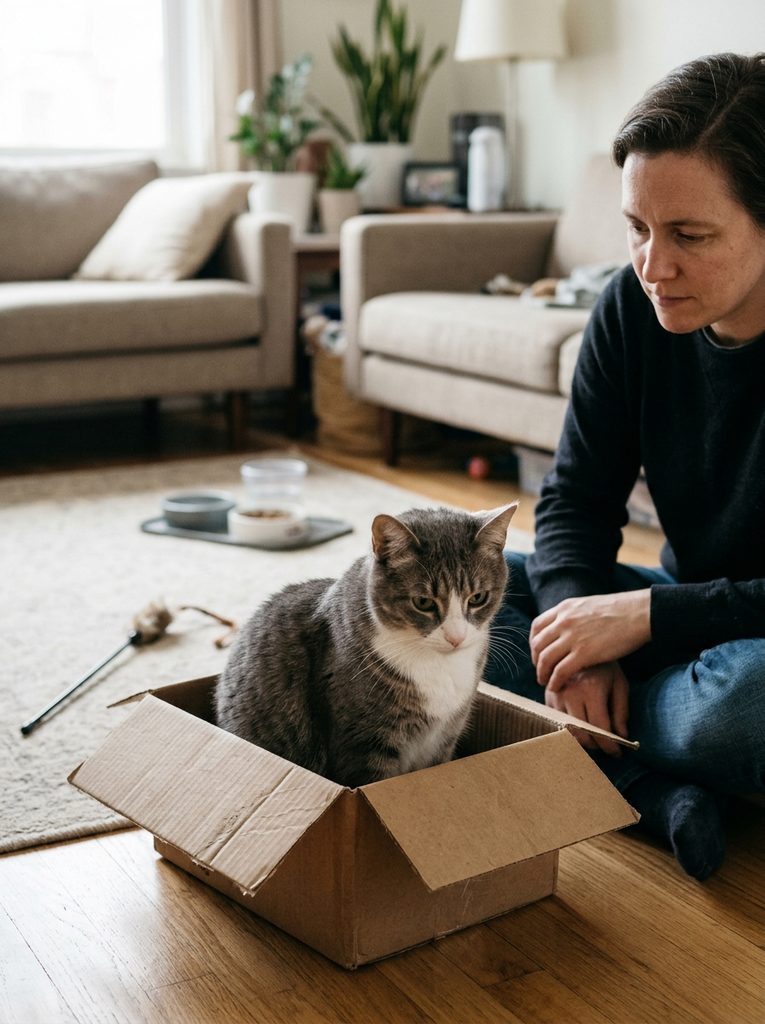
If your cat normally enjoys playing, interacting, and spending time with the family but suddenly spends most of the day hiding, pay attention.
Other warning signs may include:
- Eating or drinking less than usual.
- Unusual tiredness or reduced activity.
- Changes in litter box habits.
- Irritability or unexpected aggression.
- Difficulty jumping or moving comfortably.
- Avoiding interaction with familiar people.
Cats sometimes hide when they’re experiencing pain, illness, or stress.
If you notice these changes, contact your veterinarian for an assessment.
A cardboard box should be a comfortable retreat, not a place where your cat spends all its time because something is wrong.
Frequently Asked Questions
Why do cats love sitting in cardboard boxes?
Cats enjoy cardboard boxes because they offer enclosed spaces for hiding, resting, playing, and observing their surroundings. Boxes can also help them feel sheltered and provide a cozy place to relax.
Why does my cat sit in a box instead of its bed?
Your cat may prefer the enclosed shape and texture of a cardboard box. Some cats feel more comfortable in sheltered spaces than in open beds. Temperature, location, and individual preferences can also influence their choice.
Why do cats squeeze into tiny boxes?
Some cats enjoy snug spaces because the sides provide gentle contact around their bodies. However, a box should always be large enough for your cat to turn around and leave comfortably.
Do boxes help cats feel less stressed?
Hiding boxes can provide cats with a place to retreat when they feel uncertain or overwhelmed. Research in shelter environments suggests that hiding opportunities can support cats as they adjust to unfamiliar surroundings.
Is it okay for cats to chew cardboard?
Occasional scratching or biting may be part of normal play. However, swallowing cardboard can be harmful. Remove loose pieces and consult your veterinarian if your cat regularly eats cardboard.
Should I give my kitten a cardboard box?
Yes! A clean, sturdy cardboard box can provide a kitten with a fun place to explore, hide, and play. Make sure there are no staples, sharp edges, loose tape, or openings where the kitten could become trapped.
Why does my cat sit in a box and stare at me?
Your cat may be observing you from a comfortable hiding place or waiting for attention. Some cats also use boxes as little observation spots while watching household activities.
Final Thoughts
So, why do cats love sitting in boxes?
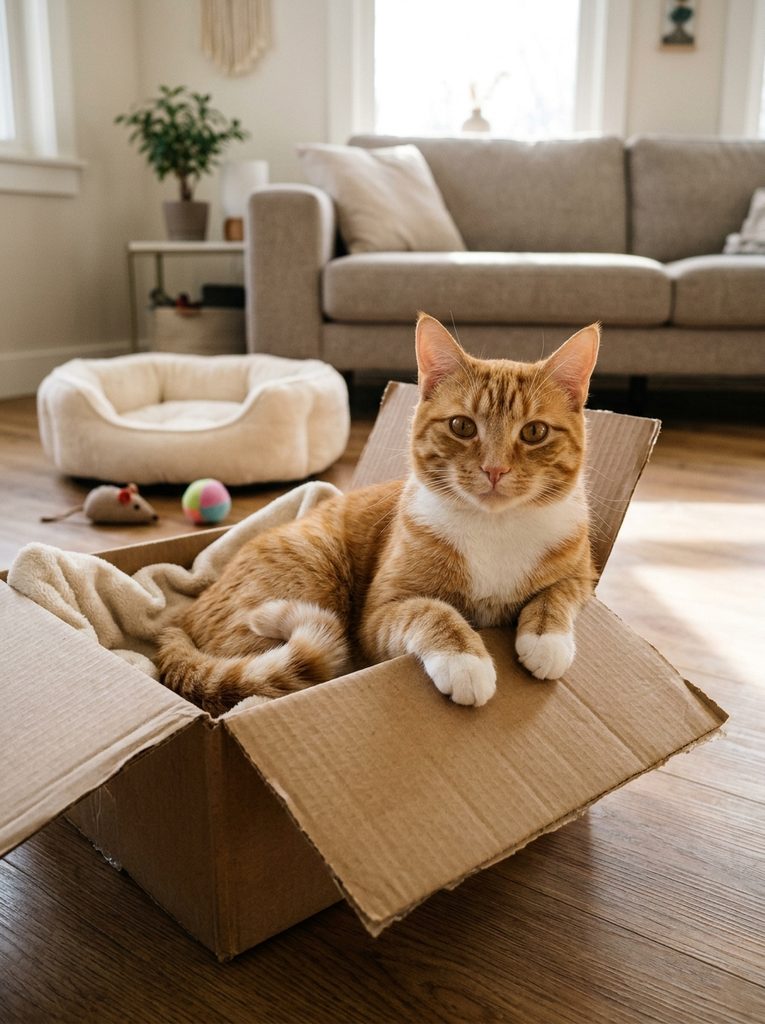
It turns out that this adorable habit has plenty of explanations. Cardboard boxes offer warmth, security, privacy, entertainment, and opportunities to explore natural feline behaviors.
And while you might never understand why your cat prefers a simple delivery box over an expensive new bed, there’s no denying how entertaining it can be.
The next time you bring home a package, don’t be surprised if your furry friend claims the empty box before you’ve even finished unpacking.
Just check that it’s clean, sturdy, and safe.
Because sometimes, the perfect cat hideaway isn’t something you buy from a pet store. It’s the cardboard box sitting right in your living room!


